Hiv/Aids Study & Research Mission(HSRM)

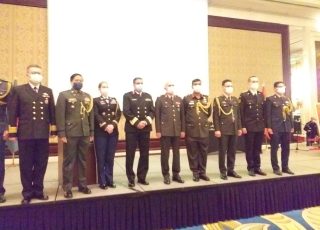
20210106_131514-scaled.jpg
20191216_214329-scaled.jpg
20210326_195817-scaled.jpg
20210326_211613-scaled.jpg
129293569_2861899704082287_3740749607551310671_n.jpg
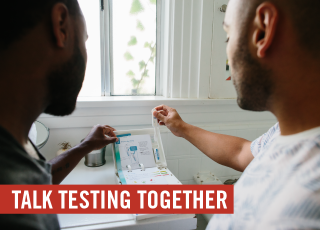
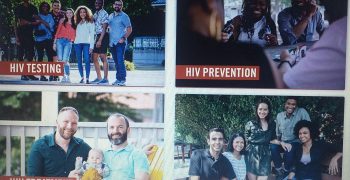
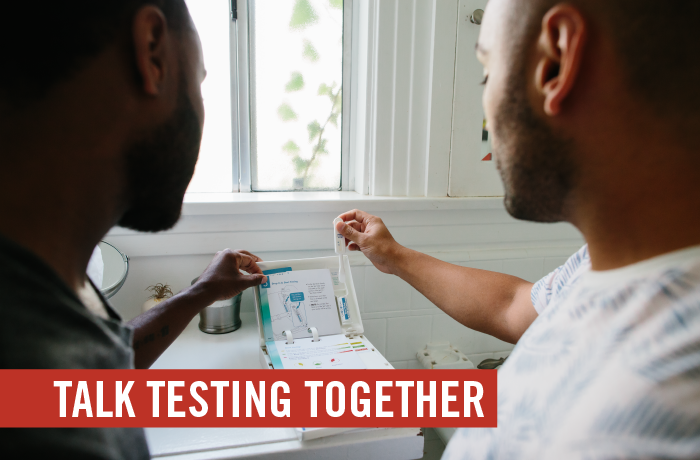
Study-hiv-talk-testing-together-700x460-1.png
director-general-1-rotated.jpg
IMG-20180327-WA0004-2.jpg
UN-AIDS-00.jpg
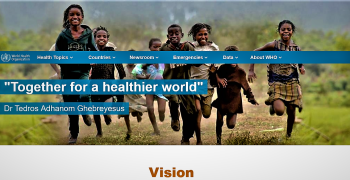
Screenshot-2022-09-16-at-00-21-35-WHO-Director-General.png
Save The Childern in Istanbul
5a213611-16b6-4eb7-ae71-86719cda311c
Hiv/Aids Study & Research Mission(HSRM)
Study-hiv-talk-testing-together-700x460
Hiv/Aids Study & Research Mission(HSRM)
166990363_2953399838265606_9012198109701953669_n.jpg
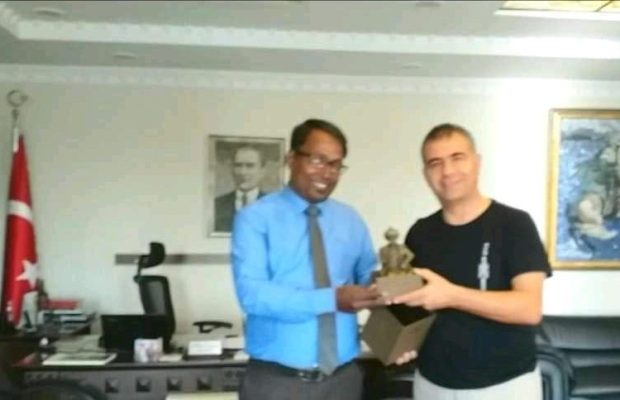
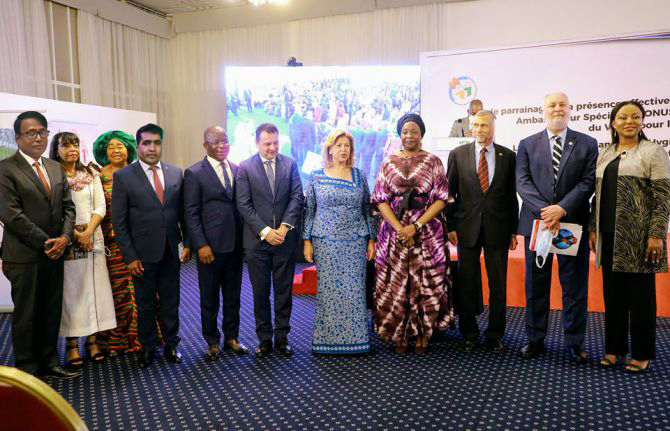
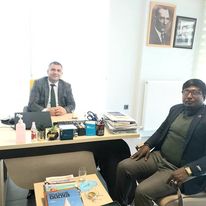
PIC OF H.E EMBASSODER OF SUDAN IN ISTANBUL WITH SECRETARY GENL. MUHAMMAD IFTEKHER ALAM of Hiv/Aids Study & Research Mission(HSRM) sept, 2015
Hiv/Aids Study & Research Mission(HSRM)
H.E EMBASSODER OF SUDAN IN ISTANBUL WITH SECRETARY GENL. MUHAMMAD IFTEKHER ALAM, Hiv/Aids Study & Research Mission(HSRM)
H.E EMBASSODER OF Albania IN ISTANBUL WITH SECRETARY GENL. MUHAMMAD IFTEKHER ALAM, Hiv/Aids Study & Research Mission(HSRM)
H.E EMBASSODER OFIstanbul & Albania IN ISTANBUL WITH SECRETARY GENL. MUHAMMAD IFTEKHER ALAM, Hiv/Aids Study & Research Mission(HSRM)
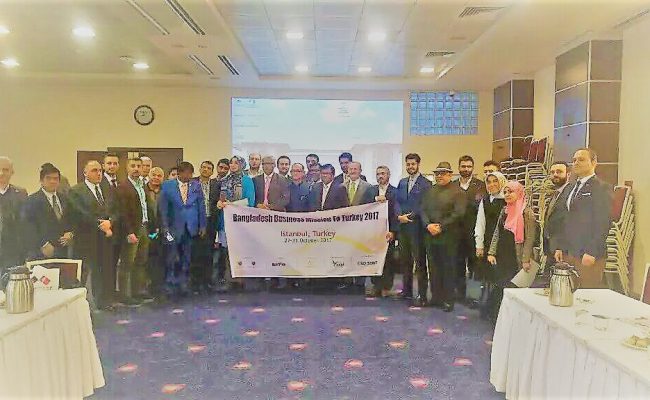
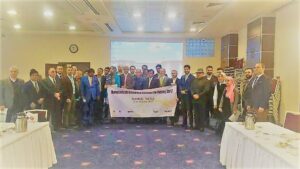
ISTANBUL WITH SECRETARY GENL. MUHAMMAD IFTEKHER ALAM, Hiv/Aids Study & Research Mission(HSRM)2017
MUHAMMAD IFTEKHER ALAM, SECRETARY GENL. Hiv/Aids Study & Research Mission(HSRM)2017
275618259_3210278312577756_7455414808517765598_n
MUHAMMAD IFTEKHER ALAM, SECRETARY GENL. Hiv/Aids Study & Research Mission(HSRM)2017


HIV and Women: HIV Diagnoses| Print

Data for 2020 should be interpreted with caution due to the impact of the COVID-19 pandemic on access to HIV testing, care-related services, and case surveillance activities in state and local jurisdictions. While 2020 data on HIV diagnoses and prevention and care outcomes are available, we are not updating this web content with data from these reports.

HIV diagnoses is one of the six Ending the HIV Epidemic in the U.S. indicators. HIV diagnoses refers to the number of people who received an HIV diagnosis during a given year. Womena accounted for 19% (6,999) of the 36,801 new HIV diagnoses in the US and dependent areasb in 2019.

EHE goal: decrease the number of new HIV diagnoses to 9,588 and 3,000 by 2030.


Among new HIV diagnoses in the US in 2019, 19 percent were among women.

 
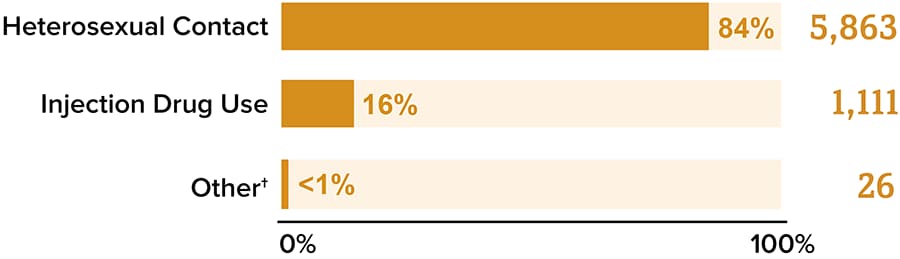
New HIV Diagnoses Among Women by Transmission Category in the US and Dependent Areas, 2019*
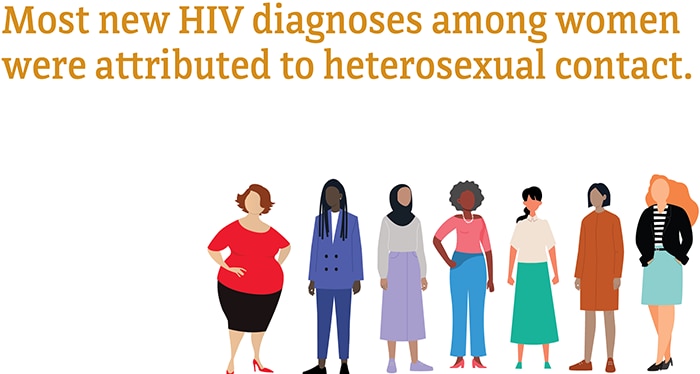
Most new HIV diagnoses among women were attributed to heterosexual contact.
Bar chart compares new HIV diagnoses in 2019 among women through heterosexual contact, injection drug use, and other means.

* Based on sex assigned at birth and includes transgender people. For more information about transgender people, visit CDC’s HIV and Transgender People web content. 
† Includes perinatal exposure, blood transfusion, hemophilia, and risk factors not reported or not identified.
Source: CDC. Diagnoses of HIV infection in the United States and dependent areas, 2019HIV Surveillance Report 2021;32.

Download and Share This Infographic

 
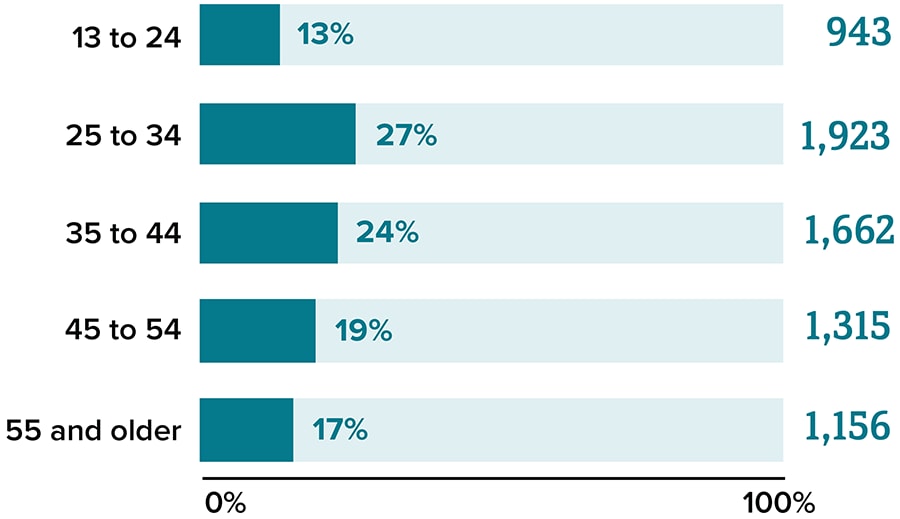
New HIV Diagnoses Among Women by Age in the US and Dependent Areas, 2019*
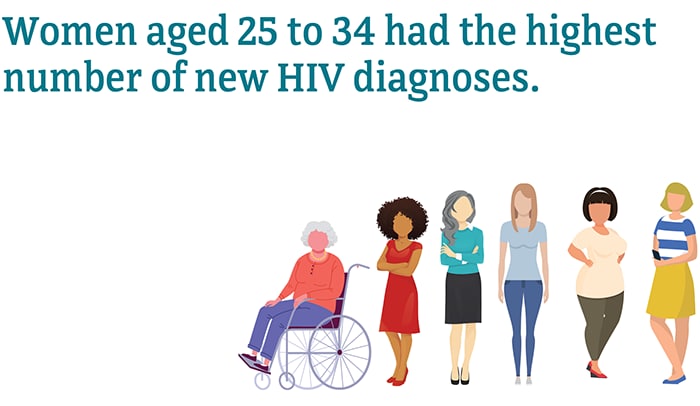
Women aged 25 to 34 had the highest number of new HIV diagnoses.
Bar chart compares new HIV diagnoses among women by age in 2019.

Total may not equal 100% due to rounding.
* Based on sex assigned at birth and includes transgender people. For more information about transgender people, visit CDC’sHIV and Transgender People web content.
Source: CDC. Diagnoses of HIV infection in the United States and dependent areas, 2019HIV Surveillance Report 2021;32.

Download and Share This Infographic

 
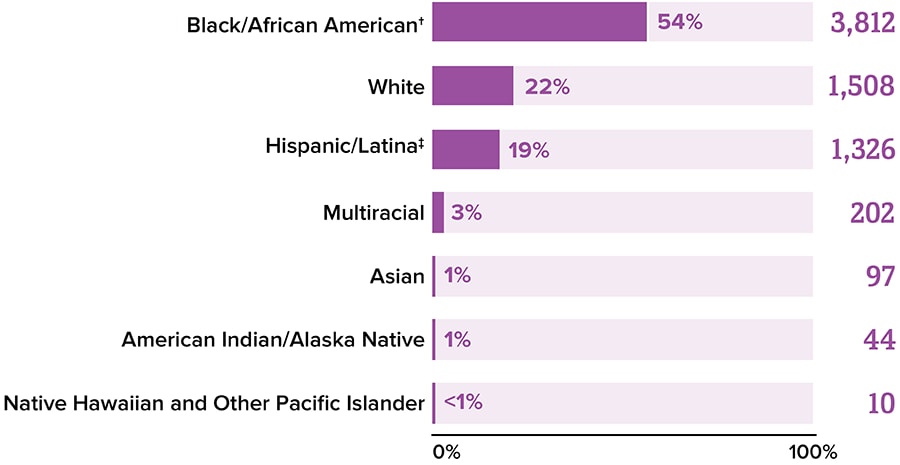
New HIV Diagnoses Among Women by Race/Ethnicity in the US and Dependent Areas, 2019*
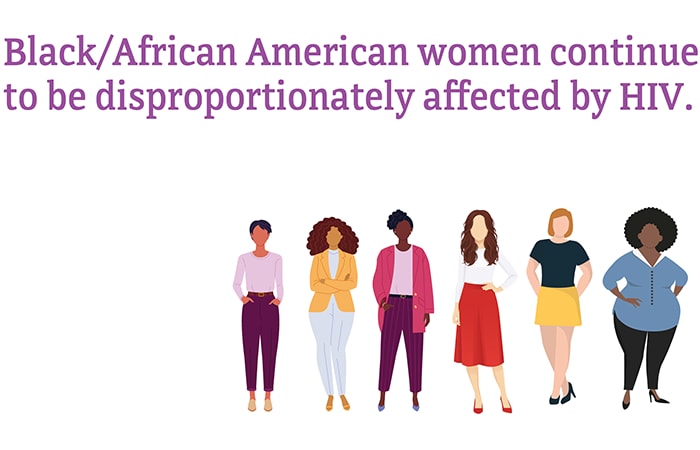
Black/African American women continue to be disproportionately affected by HIV.
Bar chart compares new HIV diagnoses in 2019 among women by race.

* Based on sex assigned at birth and includes transgender people. For more information about transgender people, visit CDC’s HIV and Transgender People web content.
Black refers to people having origins in any of the Black racial groups of Africa. African American is a term often used for people of African descent with ancestry in North America.
‡ Hispanic/Latina women can be of any race.
Source: CDC. Diagnoses of HIV infection in the United States and dependent areas, 2019. HIV Surveillance Report 2021;32.

Download and Share This Infographic


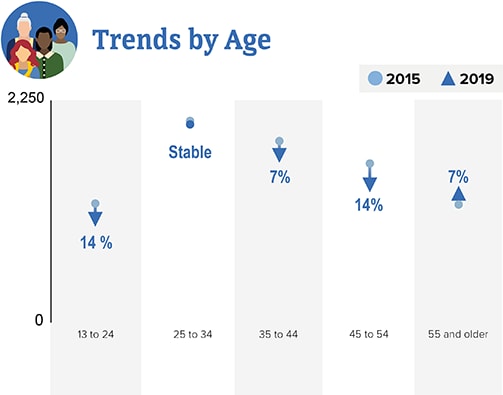
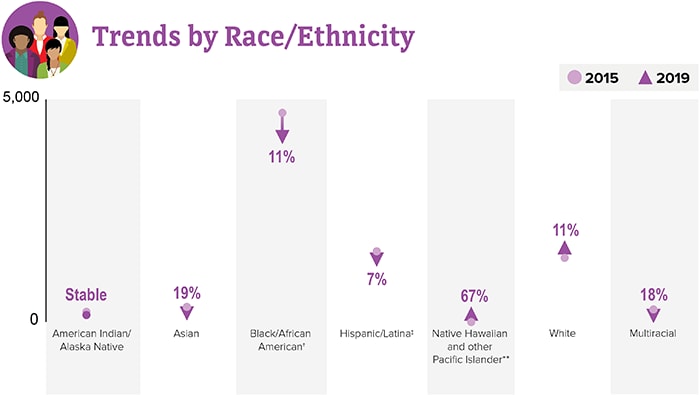
HIV diagnoses decreased 6% among women overall from 2015 to 2019. Although trends varied for different groups of women, HIV diagnoses declined for groups most affected by HIV, including Black/African American women and young women aged 13 to 24.

HIV Diagnoses Among Women in the US and Dependent Areas, 2015-2019*
Chart shows trends by age for HIV diagnoses among women from 2015 to 2019.


Chart shows trends by race/ethnicity for HIV diagnoses among women from 2015 to 2019.

* Based on sex assigned at birth and includes transgender people. For more information about transgender people, visit CDC’s HIV and Transgender People web content.
Black refers to people having origins in any of the Black racial groups of Africa. African American is a term often used for people of African descent with ancestry in North America.
‡ Hispanic/Latina women can be of any race.
** Changes in subpopulations with fewer HIV diagnoses can lead to a large percentage increase or decrease.
Source: CDC. Diagnoses of HIV infection in the United States and dependent areas, 2019HIV Surveillance Report 2021;32.

Download and Share This Infographic


icon of a woman surrounded by question marks

HIV Risk Behaviors

icon of a PrEP pill

PrEP Coverage

icon of a computer screen displaying a graph

HIV Incidence

icon of two vials of blood

HIV Diagnoses

icon of a doctor holding a medical chart

Knowledge of Status

icon of a bottle of pills

Viral Suppression and Barriers to Care

icon of a not-equal symbol, a doctor and a woman

Prevention Challenges

icon of a computer screen, a pile of books and pencils

What CDC Is Doing

HIV Treatment (with ART icon)
 
What is HIV treatment?

HIV treatment (antiretroviral therapy or ART) involves taking medicine as prescribed by a health care provider. HIV treatment reduces the amount of HIV in your body and helps you stay healthy.

  • There is no cure for HIV, but you can control it with HIV treatment.
  • Most people can get the virus under control within six months.
  • HIV treatment does not prevent transmission of other sexually transmitted diseases.

When should I start HIV treatment?

Start HIV treatment as soon as possible after diagnosis.

HIV and Perinatal Transmission

Advances in HIV research, prevention, and treatment have made it possible for people with HIV to give birth to babies who are free of HIV. The annual number of diagnoses of perinatal HIV in the United States and dependent areas has declined by more than 95% since the early 1990s.

 
icon of a bottle of pills

Preventing Perinatal Transmission

icon of a computer screen displaying a graph

The Numbers

icon of a not-equal symbol, a doctor and a woman

Prevention Challenges

icon of a computer screen, a pile of books and pencils

What CDC Is Doing

 
HIV Transmission
  • All people with HIV should take HIV treatment, no matter how long they’ve had HIV or how healthy they are.
  • Talk to your health care provider about any medical conditions or other medicines you are taking.

What if I delay HIV treatment?

If you delay treatment, HIV will continue to harm your immune system. Delaying treatment will put you at higher risk for transmitting HIV to your partners, getting sick, and developing AIDS.

Are there different types of HIV treatment?

There are two types of HIV treatment: pills and shots.

  • Pills are recommended for people who are just starting HIV treatment. There are many FDA-approved single pill and combination medicines available.
  • People who have had an undetectable viral load (or have been virally suppressed) for at least three months may consider shots.

What are HIV treatment shots?

HIV treatment shots are long-acting injections used to treat people with HIV. The shots are given by your health care provider and require routine office visits. HIV treatment shots are given once a month or once every other month, depending on your treatment plan.

Can I switch my HIV treatment from pills to shots?Talk to your health care provider about changing your HIV treatment plan. Shots may be right for you if you are an adult with HIV who
  • has an undetectable viral load (or has achieved viral suppression),
  • has no history of treatment failure, and
  • has no known allergy to the medicines in the shot.

If you and your health care provider decide to switch your HIV treatment from pills to shots, you’ll need to visit your provider regularly to receive your shots. Tell your health care provider as soon as possible if you’ve missed or plan to miss an appointment for your shot.

What are the benefits of taking my HIV treatment as prescribed?

vial of blood

HIV treatment reduces the amount of HIV in the blood (viral load).

  • Taking your HIV medicine as prescribed will help keep your viral load low.
  • HIV treatment can make the viral load very low (viral suppression). Viral suppression means having less than 200 copies of HIV per milliliter of blood.
  • HIV treatment can make the viral load so low that a test can’t detect it (undetectable viral load).
  • If your viral load goes down after starting HIV treatment, that means treatment is working. Continue to take your HIV treatment as prescribed.
  • If you skip your HIV treatment, even now and then, you are giving HIV the chance to multiply rapidly. This could weaken your immune system, and you could become sick.
  • Getting and keeping an undetectable viral load (or staying virally suppressed) is the best way to stay healthy and protect others.

HIV treatment prevents transmission to others.

  • If you have an undetectable viral load, you will not transmit HIV through sex.
  • Having an undetectable viral load likely reduces the risk of HIV transmission through sharing needles, syringes, or other injection equipment (for example, cookers), but we don’t know by how much.
  • Having an undetectable viral load also prevents perinatal transmission. If a person with HIV takes their HIV medicine as prescribed throughout pregnancy and childbirth and gives HIV treatment to their baby for 4 to 6 weeks after birth, the risk of transmission can be 1% or less.
  • Having an undetectable viral load greatly reduces the risk of transmitting HIV through breastfeeding but doesn’t eliminate the risk. The current recommendation in the United States is that parents with HIV should not breastfeed their babies.

Taking your HIV medicine as prescribed helps prevent drug resistance.

  • Drug resistance develops when people with HIV don’t take their pills as prescribed or miss their shots. The virus can change (mutate) and may limit your options for successful HIV treatment.
  • If you develop drug resistance, it will limit your options for successful HIV treatment.
  • Drug-resistant strains of HIV can be transmitted to others.

Does HIV treatment cause side effects?

HIV treatment can cause side effects in some people. However, not everyone experiences side effects. The most common side effects are
icon of a person with fever and rash
  • Nausea and vomiting
  • Diarrhea
  • Difficulty sleeping
  • Dry mouth
  • Headache
  • Rash
  • Dizziness
  • Fatigue
  • Temporary pain at the injection site (for shots)

Talk to your health care provider if your HIV treatment makes you sick. Your health care provider may prescribe additional medicines to help manage the side effects or may change your HIV treatment plan.

What should I do if I’m thinking about having a baby?

Let your health care provider know if you or your partner is pregnant or thinking about getting pregnant. They will determine the right type of HIV treatment to help prevent passing HIV to your baby.

Can I take birth control while on HIV treatment?

You can use any method of birth control to prevent pregnancy. However, some HIV treatment may make hormone-based birth control less effective. Talk to your health care provider about which method of birth control is right for you.

Will HIV treatment interfere with my hormone therapy?

Most HIV treatment can be used safely with gender-affirming or menopausal hormone therapy and testosterone replacement therapy. However, side effects may occur. Talk to your health care provider about taking HIV treatment and hormone therapy at the same time. Your health care provider will monitor any side effects and help make sure your HIV treatment and hormone therapy stay on track.

What if my HIV treatment is not working?
  • Your health care provider may change your type of HIV treatment.
  • A change is not unusual because the same HIV treatment does not affect everyone in the same way.
Sticking to my HIV treatment plan is hard. How can I deal with the challenges?
Tell your health care provider right away if you’re having trouble sticking to your plan. Together you can identify the reasons you’re skipping HIV treatment and decide how to address those reasons.
icon of a healthcare professional

Talk to your health care provider about problems taking your HIV treatment.

  • Problems taking pills. This can make staying on this type of HIV treatment challenging. Your health care provider can offer tips for addressing these problems, including switching to an injectable HIV treatment option.
  • Side effects. Nausea or diarrhea can make a person not want to continue their HIV treatment. There are medicines or other support, like nutritional counseling, to make sure you’re getting important nutrients. This can help with the most common side effects.
  • HIV treatment fatigue. Some people find that sticking to their HIV treatment plan becomes harder over time. Make it a point to talk to your health care provider about staying on your plan.
  • A busy schedule. Work or travel away from home can make it easy to forget to take pills or miss a shot. It may be possible to keep extra pills at work or in your car. But talk to your health care provider first as extreme temperatures can affect some medicine.

Talk to your health care provider if you miss doses of your HIV treatment.

  • Missing a dose of pills. In most cases, you can take your pills as soon as you realize you missed a dose. Then take the next dose at your usually scheduled time (unless your pharmacist or health care provider has told you otherwise).
  • Missing a shot. If you missed an appointment for your shot, talk to your health care provider about receiving your next shot.
  • Missing doses. Talk to your health care provider or pharmacist about ways to help you remember your HIV treatment. Your health care provider may even decide to change your treatment to fit your needs and life situation.

Find help for mental health or substance use disorders.

  • Being sick or depressed. How you feel mentally and physically can affect your ability to stick to your HIV treatment plan. Your health care provider, social worker, or case manager can refer you to a mental health provider or local support group.
  • Substance use (drug or alcohol). If substance use is interfering with your ability to keep yourself healthy, it may be time to find help.
  • If you need help finding substance use disorder treatment or mental health services, use SAMHSA’s Treatment Locator.

Join a support group or ask your family and friends for support. They can help you stick to your treatment plan.               

Find HIV/Aids Study & Research Mission is Prevention Services Near You

Select the services you would like to filter

Find HIV Prevention Services Near You

Select the services you would like to filter by:

HIV Testing Services HIV Testing
PrEP Services PrEP
PEP Services PEP
Condoms Services Condoms

Due to COVID-19, this widget may not have the most up-to-date changes to an organization’s services or hours. Please contact the organization for your Treatment and Keep Prevention


Albert Einstein College of Medicine-Montefiore Medical Center designates this continuing education activity for 9.25 contact hours (0.925 CEUs) of the Accreditation Council for Pharmacy Education. Universal Activity Number – JA4008224-9999-22-044-L02-P.

Type of Activity: Knowledge-based

After completion of the activity and submission of the activity evaluation form, transcript information will be sent to the NABP CPE Monitor Service within 60 days.

The 2022 95-95-95 Targets Update is sponsored by the International Association of Providers of AIDS Care (IAPAC) in partnership with the Joint United Nations Programme on HIV/AIDS (UNAIDS).

Following are workshop presentations. The workshop organizers request that any use of these presentations should include citations to both their presenting authors and relevant conference information (e.g., 2022 95-95-95 Targets Update, July 28, 2022, AIDS 2022, Montreal).

DISCLOSURE: The 2022 95-95-95 Targets Update is supported through Gilead Sciences and Merck & Co. in the form of educational grants and ViiV Healthcare in the form of a corporate sponsorship.

THURSDAY, JULY 28, 2022


HIV and COVID-19 – Drawing Lessons from Dual Pandemics

Moderator: José M. Zuniga, IAPAC and Fast-Track Cities Institute, Tampa, FL, USA

Panelists:
Eamonn Murphy, UNAIDS, Geneva, Switzerland
Meg Doherty, WHO, Geneva, Switzerland


Country Case Studies:
Moderator: Jorge Saavedra, AHF, Miami, FL, USA

Brazil
Angélica Espinosa Miranda, Ministry of Health, Brasília, Brazil

United Kingdom
Alison Brown, UK Health Security Agency, London, UK


City Case Studies:
Moderator: Gonçalo Lobo, Fast-Track Cities Institute, Lisbon, Portugal

Amsterdam
Udi Davidovich, Amsterdam Public Health Service, Amsterdam, Netherlands

Buenos Aires
José Barletta, National Ministry of Health, Buenos Aires, Argentina

Chicago
Jorge Cestou, Chicago Department of Public Health, Chicago, IL, USA


Community Perspectives on Re-Prioritizing the HIV Response
Moderator: Laurel Sprague, UNAIDS, Geneva, Switzerland

Panelists:
Jorge Garrido, Apoyo Positivo, Madrid, Spain
Sbongile Tshabalala, Treatment Action Campaign, Johannesburg, South Africa


Prioritizing Equity to Close HIV Prevention and Treatment Gaps
Moderator: José M. Zuniga, IAPAC and Fast-Track Cities Institute, Tampa, FL, USA

Panelists:
Florence Anam, GNP+, Nairobi, Kenya
Matthew Kavanagh, UNAIDS, Geneva, Switzerland
Alexandra de Pokomandy, McGill University, Montréal, QC, Canada

LECTURERS

Nigel Draffin
Hiv/Aids Study & Research Mission(ASRM)

Nigel Draffin

ACADEMY DIRECTOR

Technical Consultant, Lecturer and Author

Nigel Draffin has been involved in shipping for over 50 years and in bunkering for over 25 years. He joined Shell Tankers in 1966, serving on all classes of vessel, including VLCCs and LNG tankers. In 1979, he joined the newbuilding department of Shell International Marine and later transferred to Shell’s R&D unit, specialising in control systems, fuel combustion and safety systems.

In 1986, Nigel moved to the commercial department as a bunker buyer and economics analyst, two years later becoming Head of Operational Economics, responsible for all of the fuel purchased for the Shell fleet. In 1996, he joined E. A. Gibson Shipbrokers which, in 2006, merged with US-based broking house LQM Petroleum Services, where he was Senior Broker and Technical Manager. He retired from LQM in July 2015.

Nigel is a founder member of IBIA, serving several times on its council of management, the board and as its Chairman. Nigel has written 10 books on bunkering, shipping and marine lubes published by Petrospot, and is Director of the Petrospot Academy. Nigel is a member of IMarEST and Past Master of the Worshipful Company of Fuellers.

Nicholas Browne

Nicholas Browne

Global Director, GAC Bunker Fuels

Nicholas Browne was appointed Global Director of the GAC Group’s marine fuel and lubricants, trading and brokerage arm – GAC Bunker Fuels in January 2012, based at the company’s headquarters in Dubai, UAE.

Responsible for strategic, commercial, financial and operational development, Browne manages a global team of 30 staff across five continents, dedicated to meeting the operational requirements of GAC’s diverse customer base around the world.

Browne has almost ten years’ experience in risk management, beginning his career with MRC (now Lloyd’s List Intelligence) in 2005 and joining GAC as Credit Manager in 2009. Since joining GAC Bunker Fuels, the company has added four new strategically located offices to its global network and doubled the staff of its dedicated team.

GAC Bunker Fuels is one of an elite group of ISO 9001 & TRACE-certified companies in the bunker industry, committed to compliance and operational excellence in everything it does.

Browne holds a Bachelor of Arts degree in Modern History & politics from the University of Durham.

Peter David

Peter David

Technical Consultant, BP Marine

PETER DAVID joined the BP Research Centre, Sunbury-on-Thames in 1977 after graduating from the University College of Swansea, University of Wales with BSc (Hons) and PhD degrees in Chemistry.

After a short period in the Analytical Laboratory applying infrared spectroscopy to research the structure of crude oils and petroleum products, he joined the BP Global Fuels Technology Team and over a period of 25 years at Sunbury-on-Thames gained experience on all transport and power generation liquid fuels. From 1995, he was Team Leader of the Product Quality Team, with responsibility for design and implementation of development projects to support BP’s worldwide fuel marketing and manufacturing strategies.

He left BP in 2003 and is currently working as a Technical Consultant for BP Marine, other petroleum companies and equipment manufacturers.

José A Digeronimo

José A Digeronimo

Graduated as Maritime Economist from Universidad Argentina de la Empresa in 1991, have a post Degree and Master in Shipping form ULACIT, Panama in 1997. Have act as lecturer on several universities since 1999 and designed and stablished the Post degree on Bunkers program for the Panama International Maritime University.

He started his shipping carrier in 1992 as vessel operator for Panamanian Carriers Corporation growing to became Tanker Manager, in 1999 he started as Project Manager for Petrolera Nacional, where he stablished Transmarine Transportation and Barging in 2001, a bunker barge operation, that he lead as general manager. In 2009 he partners with Dutch Barge operator, VT group and stablished VT Shipping Panama becoming his director until February 2019. Today he is the Executive Director of the Panamanian Bunker Association, work as lead consultant for Maritime Procurement inc,

He has been very active on business associations being chair of committees. He created and was the first chairman the Bunker committee for the Panamanian Shipping Chamber and the Panama bunker cluster. He was also board member for 8 periods and president of the Panama Shipping chamber in 2010-2011.

Mr. Digeronimo is a regular speaker at multiple bunker events in Latin America, including MWA, he is lecturer on the Petrospot bunker courses in Spanish and organizes and directs the BunkerExperience Panama. 

Michael Green

Michael Green

Senior Quality Manager – Marine, World Fuel Services

Michael joined World Fuel Services, as Senior Quality Manager for Marine Technical, in December 2019 following 17 years in the fuel testing industry with Lintec Testing Services / Intertek ShipCare. As a member of the marine technical team his focus is delivering added value to WFS customers. The technical team also offers support for the WFS physical delivery locations, support in relation to continued progression of legislative reform, development of new fuels and technologies and quality / quantity disputes.

Michael is heavily involved with a range of established industry technical committees and working groups as well as industry associations within the marine fuel sector. He currently represents the UK on the BSI PTI /002 working group as well as number of ISO working groups including the ISO 8217 working group ISO/TC 28/SC 4/WG 6, and the ISO Alternative Marine Fuels group ISO /TC28/SC4/WG18. He is also an active member in a number of different working groups and sub-committees at The Energy Institute as well as having previously spent 9 years as a member of the CIMAC Working Group 7 for Fuels.

Michael is the immediate past Chairman of the International Bunker Industry Association (IBIA), a position he held for two years. He joined the IBIA Board of Directors in April 2014 taking an active role in the development and progression of the association. During his time at IBIA he acted as the chairman of the working group for Training and Education and was elected to the position of Vice Chair of the IBIA board of directors in April 2016. Michael took on the role as the Chairman of the IBIA Board of Directors in April 2018 working closely with the Director of IBIA to ensure progression and recognition of the contribution the association provides to its members and the bunkering industry as a whole.

Paul Millar

Paul Millar

Credit Manager, Hartree Marine Fuels LLC

PAUL MILLAR entered the marine credit industry in 1984 when he joined ECS Marine as a credit analyst.  In 1991, he joined MRC Business Information Group Ltd which later became Lloyd’s MIU and subsequently Lloyd’s List Intelligence. As Intelligence Director, Paul was responsible for the entire credit reporting business and data gathering side for the Companies and Ports business.

Paul left Lloyd’s in June 2009 to join Bomin Ltd as Managing Director and Head of Global Credit for the Bomin Group. 

In July 2020, Paul established Bunker Credit Management Ltd and provided credit management services for Bomin Bunker Oil Corp and GCC Bunkers.

Most recently, Paul joined Hartree Marine Fuels LLC as Credit Manager. Hartree Marine is 100% owned by Hartree Partners LP and ultimately majority controlled by Oaktree.

John Phillips

John Phillips

Head of Credit Risk – Bunkers, Gulf Petrochem

With over 30 years experience in the Maritime sector, John is a well known expert in the industry and will focus on areas such as Credit Management (focused on Bunker business), Credit insurance & Bunker business development.

Before joining Gulf Petrochem, he held the role of Global Head of Credit and Director at Soyuz Bunkering Group (Singapore) Pte Ltd, handling customer selection and promotion as well as liaising with legal departments and insurers on ship arrests and insurance claims. Prior to this, Phillips worked for Chemoil Energy Ltd, where he was responsible for the creation, implementation and management of global credit and counter party risk policy.

Phillips is a graduate in Maritime Business with Maritime Law and has completed his MSc in Port Management at University of Plymouth, UK in 2002. He is a Fellow of the Institute of Chartered Shipbrokers, a chartered member of the Institute of Logistics & Transport, and a Member of the Institute of Petroleum, IBIA and IECA.

Andrew Preston

Andrew Preston

Partner, Preston Turnbull

He acts for a wide range of international banks, corporates and trade houses on all types of commercial litigation disputes. Andrew specialises in general commercial litigation, shipping and trading disputes. Over twenty five years, he has acted for a large number of corporates, oil majors, shipowners, insurers, charterers, operators, suppliers and cargo interests and their insurers both nationally and internationally. He has litigated in every level of Commercial Court up to the Supreme Court on two occasions (Datec –v- UPS and The Far Service). Throughout his career he has applied his skills to find commercial solutions for clients. Andrew has been rated by the directories as one of the leading shipping lawyers for many years acting for a wide range of shipowners, trading houses, charterers and their insurers. One client in the Directories said “Probably the best lawyer for head on the block advice. Andrew Preston exercises sound judgment as a gift simplifying even the most complex problems”.

He steered Clyde & Co as the Global Head of Shipping for over a decade taking it to a tier 1 ranking.

Andrew is recognized as one of the leading lawyers in the world at liabilities arising out of bunker/fuel supply disputes. He was involved, together with James Kennedy, in the new Bimco bunker contracts and centrally involved in all of the major bunker events over the last years including the OW collapse, the collapse of Hanjin and the Houston problems of 2018. He is advising many industry figures in relation to 2020 issues and the forthcoming sulphur caps.

J. Stephen Simms

J. Stephen Simms

Partner, Simms Showers LLP / IBIA Board Member

J. Stephen (“Steve”) Simms is a Principal of Simms Showers LLP.  He serves as Chair of the International Bunker Industry Association (IBIA) Legal Working Group and is an immediate past member of IBIA’s Board.

Steve was selected for the United States Department of Justice, Honor Law Graduates Program and served as a federal prosecutor before entering private practice.  He is a graduate of the Northwestern University School of Law (Chicago) where he was Editor‑in‑Chief of the Northwestern Journal of International Law and Business. He holds an M.A. in International Studies from The Johns Hopkins University School of Advanced International Studies, and a B.A. in International Studies from The Johns Hopkins University.

Steve is extensively involved in bunker quality disputes, including the recent Houston-Panama-Singapore quality claims situation. He advises leading bunker traders, suppliers and brokers on the many issues arising in advance of 2020, including important revisions to sales terms and conditions, bunker delivery receipts, and sound credit and recovery planning.

He is a member of the Maritime Law Association of the United States and of the bars of the United States Supreme Court, the United States Courts of Appeal for the Second, Third, Fourth, Fifth, Seventh, and Eleventh Circuits; United States District Courts for the District of Maryland (Trial Bar), District of Columbia, Northern District of Illinois, the states of Maryland and the District of Columbia, the United States Court of International Trade, and through special admission practices in other federal and state courts throughout the United States.

Chris Turner

Chris Turner

Group Technical Manager, Cockett Marine Oil

With over 30 years’ experience in the Shipping sector and having spent the last 10 years exclusively within the Bunkering Industry Chris has extensive knowledge of Laboratories, Inspection Services, Physical Supply and Trading.

Chris started his career in laboratories and spent 20 years with Inspectorate progressing to Technical Manager of all UK Inspection and Laboratory Activities.

Moving to Bunkering in 2010, Chris now works for Integr8 fuels as their Global Manager of Bunker Quality and Claims and is based in Singapore. His main responsibilities currently include Management and Resolution of Disputes, Technical Support for pool partners, customers and traders, IMO 2020 strategy including IMO 2020 strategies, counterparty vetting, training and the management of Integr8 fuels ISO 9001 global accreditation.

Michael Atkinson

Michael Atkinson

Customer Services Manager – Intertek Lintec

Michael graduated from the University of Newcastle-Upon-Tyne with a BSc (Hons) degree in Chemistry in 2005. In June 2006 he joined Lintec Testing Services as a Laboratory Analyst, moving into the role of Shift Supervisor the next year.

Having spent just over 3 years in the laboratory, Michael moved to the Customer Services team in 2010 and having gained valuable experience in the client facing role, took on additional responsibilities as a Key Account Manager at the beginning of 2017, and added the role of Technical Supervisor in December 2019.

The start of 2020 saw Michael move into the Customer Services Manager’s role, where he is involved with the day to day running of the department, overseeing global testing and inspection operations which are coordinated from the Intertek Lintec office in Darlington.

Mark Williams

Mark Williams

Managing Director, Shipping Strategy Ltd

Mark Williams is founder and Managing Director of Shipping Strategy Ltd, a boutique management consultancy based in the UK which focuses providing data-driven actionable insights on maritime and energy industries to clients including governments and regulators, ship owners, investors and charterers, trading houses and other actors in and around the shipping industry. Mark is also Contributing Editor of Ship.Energy, the leading free-to-view website covering shipping’s path to zero carbon, and presenter of the popular Ship.Energy podcast. He is a founder of Diversity Study Group, a peer benchmarking service for HR professionals in the shipping and energy industries. He is a Course Director at Lloyd’s Maritime Academy where he teaches on Shipping Markets Analysis and ESG in Shipping. Mark has 25 years’ experience in ship finance, broking and consultancy with companies like Informa, HSBC and Braemar Seascope. He is a Member of the Institute of Chartered Shipbrokers. 

Brendan Cuffe

Brendan Cuffe

Director of UK, Marine Engineer, Brookes Bell

Brendan Cuffe is an Incorporated Engineer with a First Class Certificate of Competency (Motor) and a BSc (Open) degree.  Brendan joined Brookes Bell in 2008 initially in the London office, after ten years’ previous surveying experience with two London based Marine Consultancies.  Brendan relocated to Shanghai office in 2010 until April 2019 when he returned to Liverpool in the role of Director of UK.  Brendan also leads our fuel team and is also responsible for the operations and expansion of our bunkering department and has dealt almost exclusively with bunker dispute cases since 2018.  As well as attending vessels to investigate damage and cause when fuel quality is suspected, Brendan works in close co-operation with our chemists, dealing with a range of fuel related matters such as contamination, non-conformance to ISO:8217 specifications, sampling and on board fuel management of problematic fuels. 

Ravi Parameswaran

Regional Technical Manager (O&P) Asia, Bureau Veritas

Keshminder Singh

Operations Manager, Bureau Veritas

Hiv/Aids Study & Research Mission (HSRM)

See Us is a global awareness campaign focused on helping to address the unique challenges faced by women living with HIV.

The campaign seeks to assist in breaking down barriers, improving overall care and support, and, ultimately, helping to encourage women living with HIV to create a cohesive community and advocate for their own needs through improved dialogue between the patient and the healthcare provider.

See Us is a collaboration with the International Association of Providers of AIDS Care (IAPAC) and an expert Steering Committee, which includes women living with and affected by HIV, National AIDS Manual (NAM) and the medical community in Argentina, Canada, Italy, Nigeria, Poland, Romania, Russia, the United Kingdom and the United States. See Us was made possible through funding provided by AbbVie.

Should you have any questions, please send us a message at SeeUs@iapac.org.

Expert Steering Committee

Dr. Antonella d’Arminio
Monforte, Italy

Antonella d’Arminio Monforte is a Professor of Infectious Diseases in the Clinic of Infectious and Tropical Diseases, Department of Health Sciences, University of Milan, San Paolo Hospital. She is on the Executive Committee for the European AIDS Clinical Society. She is also coordinator for the Italian Cohort of Antiretroviral Naïve Patients (ICONA cohort). Prof. d’Arminio Monforte is also a member of the SHE Medical Advisory Board.

Greta Hughson
United Kingdom

Greta Hughson is Digital Manager at NAM/aidsmap, the HIV information charity. Greta joined NAM in 2008. She works on NAM’s website, information resources, news bulletins and social media, and is passionate about supporting people to understand their health and options.

Kamaria Laffrey
United States

After being diagnosed with HIV in 2003, Kamaria knew what her calling was and has been taking the steps to bring awareness and action to eliminating the stigma associated with HIV/AIDS. Kamaria volunteers throughout the state of Florida as a speaking and education consultant, and serves on the FL Community Health Worker coalition. Kamaria is currently pursuing a B.A. in Human Services at Southeastern University.

Bose Olotu
Nigeria

Bose Olotu Oladayo is a blogger for A Girl Like Me, the Well Project. She lives in Lagos, Nigeria and is married with three children. About eleven years ago she tested positive with HIV, and would like to share her experience on the blog to help others learn from experience as a woman living with HIV.

Maria Yakovleva
Russia

Maria has very strong expertise in advocacy for women living with HIV. She is with “Svecha,” an organization working in peer counseling, social support and psychological support for vulnerable populations.

IAPAC & Hiv/Aids Study & Research Mission (HSRM) (April 4, 2022) – Mayors from across Europe signed a Fast-Track Cities Mayors’ Declaration of Support for Ukrainian People Affected by HIV, TB, and Viral Hepatitis. As of today, 31 Mayors have signed the Mayors’ Declaration, expressing their solidarity with Ukraine’s four Fast-Track Cities and the people of Ukraine. The Mayors’ Declaration cites among other concerns the significant disruptions in HIV and other essential health services caused by the war in Ukraine, which also affect a growing number of refugees.

In announcing the release of the Mayors’ Declaration, Dr. José M. Zuniga, President/CEO of IAPAC and the Fast-Track Cities Institute, said that he “[applauds] the European Fast-Track Cities Mayors who signed the Mayors’ Declaration of Support for Ukrainian People Affected by HIV, TB, and Viral Hepatitis for taking a stance and expressing their solidarity with the Ukrainian people during this humanitarian, among them people living with and affected by HIV, TB, and viral hepatitis.”

Following is the Mayors’ Declaration of Support for Ukrainian People Affected by HIV, TB, and Viral Hepatitis released March 31, 2022:

Fast-Track Cities Europe Mayors Declaration of Support for

Ukrainian People Affected by HIV, TB, and Viral Hepatitis

We, the undersigned Mayors of Fast-Track Cities from across Europe, stand in solidarity with communities in our peer Fast-Track Cities in Ukraine, and indeed all people of Ukraine, who are valiantly enduring the unprovoked war besieging their country. We further condemn the violence the Russian Federation is inflicting upon the Ukrainian people, which runs afoul of our shared commitment to the rights outlined in the Universal Declaration of Human Rights, notably that “everyone has a right to life, liberty, and security of person,” as well as “to a standard of living adequate for [their] health and well-being.”

We express our grave concern about the well-being of Ukrainian people affected by HIV, tuberculosis (TB), and viral hepatitis. We note that our peer Mayors in the four Ukrainian Fast-Track Cities – Kyiv, Dnipro, Kryvyi Rih, and Odessa – are fellow signatories of the Paris Declaration on Fast-Track Cities. By joining the Fast-Track Cities network, our respective cities and more than 380 other cities worldwide agree to support the uninterrupted provision of a continuum of testing, prevention, treatment, and social support services for HIV, TB, and viral hepatitis available to our communities.

We understand that every day in which Ukrainian people cannot access health and social services presents an imminent threat of severe health consequences. For example, HIV service disruptions for an estimated 156,000 people living with HIV who are on life-saving treatment may lead to unnecessary disease progression and, possibly, reduced life expectancy. Furthermore, key populations, such as members of the LGBTQ+ community, people who use drugs, and other marginalized groups, face unique hardships in conflict situations because of underlying vulnerabilities. These communities already face significant barriers to accessing medical and psychosocial care and harm reduction services, and the crisis in Ukraine will place these life-saving interventions out of reach with deleterious public health outcomes at individual, community, and population levels.

We acknowledge that as Fast-Track Cities we agree to collectively ensure people affected by HIV, TB, and viral hepatitis enjoy full participation in society – free from violence or persecution – and promise to “galvanize global support for healthy and resilient societies.” The humanitarian crisis in Ukraine has defined an unprecedented need for global solidarity, both for those who remain in the country and for millions of Ukrainians who are seeking refuge abroad. This need includes the provision of medical and social services to a growing number of refugees, among them people at risk for and those living with HIV, TB, and viral hepatitis.

We, the signatories to the Paris Declaration on Fast-Track Cities, embrace its call for Mayors to “unite as leaders” and work together – across borders, languages, cultures, and creeds – to realize the rights of all people to life, health, and dignity, as enumerated in the Universal Declaration of Human Rights. In times of crises, we do not suspend these commitments, but rather reaffirm them with urgency and purpose. For decades, we have been humbled and inspired by the resiliency of people affected by HIV, TB, and viral hepatitis, and we know that Ukrainian people affected by these conditions will need that resiliency today more than ever.

We are united in solidarity with Ukraine and its four Fast-Track Cities. Moreover, we commend countries and Fast-Track Cities providing refuge to displaced Ukrainians, including those affected by HIV, TB, and viral hepatitis. We hereto pledge our commitment to transform this declaration of support into concrete actions on behalf of our respective Fast-Track Cities and in the spirit of solidarity.

Signatories (updated April 15, 2022):

Honorable Natalia de Andrés, Mayor, City of Alcorcón, Spain

Honorable Carla Tavares, Mayor, City of Amadora, Portugal

Honorable Femke Halsema, Mayor, City of Amsterdam, The Netherlands

Honorable Valeria Mancinelli, Mayor, City of Ancona, Italy

Honorable Kostas Bakoyannis, Mayor, City of Athens, Greece

Honorable Giorgio Gori, Mayor, City of Bergamo, Italy

Honorable Franziska Giffey, Mayor, City of Berlin, Germany

Honorable Emilio Del Bono, Mayor, City of Brescia, Italy

Honorable Marvin Rees, Mayor, City of Bristol, United Kingdom

Honorable Rod McKerlich, Lord Mayor, City of Cardiff, United Kingdom

Honorable Alison Gilliland, Lord Mayor, City of Dublin, Ireland

Honorable Damiano Coletta, Mayor, City of Latina, Italy

Honorable Daniel Butler, Mayor, City of Limerick, Ireland

Honorable Carlos Moedas, Mayor, City of Lisbon, Portugal

Honorable Sadiq Khan, Mayor, City of London, United Kingdom

Honorable Grégory Doucet, Mayor, City of Lyon, France

Honorable Pedro Ramos, Regional Secretary of Health and Civil Protection, Regional Government of Madeira, Portugal

Honorable Andy Burnham, Mayor, City of Manchester, United Kingdom

Honorable Benoît Payan, Mayor, City of Marseille, France

Honorable Gian Carlo Muzzarelli, Mayor, City of Modena, Italy

Honorable Christian Estrosi, Mayor, City of Nice, France

Honorable Isaltino Morais, Mayor, City of Oeiras, Portugal

Honorable Anne Hidalgo, Mayor, City of Paris, France

Honorable Ivan Vuković, Mayor, City of Podgorica, Montenegro

Honorable Rui Moreira, Mayor, City of Porto, Portugal

Honorable Zdeněk Hřib, Mayor, City of Prague, Czech Republic

Honorable Antonio Muñoz Martínez, Mayor, City of Sevilla, Spain

Honorable Abel Caballero, Mayor, City of Vigo, Spain

Extra-Jurisdictional Signatories (as of April 15, 2022):

Honorable Lettie McCarthy, Mayor, Dun Laoghaire-Rathdown County Council, Ireland

Honorable Seána Ó Rodaigh, Mayor, Fingal, Dublin County, Ireland

Honorable Peter Kavanagh, Mayor, South Dublin County Council, Ireland

Honorable Lamberto Bertolè, Deputy Mayor, Welfare and Health, City of Milan, Italy

Add Your Heading Text Here

Rabab-Fatima-has-been-appointed-UN-Under-Secretary-General-1.jpg
240772168_3065313367074252_6553632452173098867_n.jpg
15616.jpg
240772147_3065312800407642_3456884500078183045_n.jpg
87bd74f4-e834-44b1-a4d6-94ad2961d8cc.jpg
20210326_204141-scaled.jpg
Study-hiv-prevention-700x460-1.png
0OEPWHHr3s5DciEUGpaoNpv8jT1-1.jpg
chaiman-sir-present-1-scaled.jpg
ab8b084f-5542-46fd-aac3-ea895554f83c.jpg
who-program.jpg
297167560_1824750971237012_3783154099016405142_n.jpg
AMBASSODER-CONSULER-2.jpg
Istanbul Office
Istanbul Office
Conference Hiv/Aids Study & Research Mission
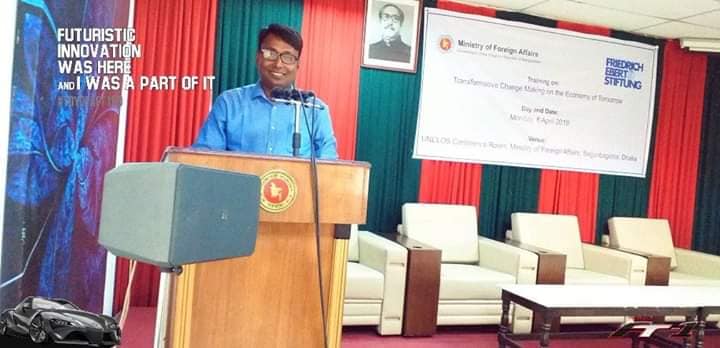
Ministery Foreign Affaiers, dhaka .Hiv/Aids Study & Research Mission
Ministery Foreign Affaiers, dhaka .Hiv/Aids Study & Research Mission, 2017
MinisterIn Istanbul Hiv/Aids Study & Research Mission, 2016
In Istanbul
In Istanbul
In Istanbul
In Istanbul
In Hong Kong
In China
In China
SAVE-THE-CHILDREN-IN-EUROPE-AFTER-MEETING.jpg
TC-METRO-RAILWAY-DG-AND-CHIEF-ENGININER.jpg
dc303810-a2f6-42fc-99f9-504416e04782.jpg
bfac58df-92bc-493a-baa3-605e70048751.jpg
UNICEF.jpg
20210326_201348-scaled.jpg
20210107_005250-scaled.jpg
20200118_185316-scaled.jpg
240657721_3065313323740923_5641634873112784643_n.jpg

Most people who get HIV get it through anal or vaginal sex, or sharing needles, syringes, or other drug injection equipment (for example, cookers). But there are powerful tools that can help prevent HIV transmission.

This section answers some of the most common questions about the risk of HIV transmission for different types of sex, injection drug use, and other activities. You can also download materials about HIV transmission.

HIV Transmission Topics

icon of a man and woman in bed

Ways HIV Can Be Transmitted

icon of body fluid

Body Fluids that Transmit HIV

Ways HIV is NOT Transmitted

Ways HIV is Not Transmitted

viral load

Factors that Increase HIV Risk

Injection Drug Use

Injection Drug Use

substance use

Substance Use

Icon of HIV Virus

HIV Superinfection


Other Resources

HIV Risk Reduction Tool
Hiv/Aids Study & Research Mission

Get tailored information about your risk and learn how to protect yourself.

Let's Stop HIV Together
Hiv/Aids Study & Research Mission

Resource Library

CDC offers many resources to help you learn about HIV. CDC fact sheets discuss how HIV affects specific sub-populations and provide information about topics such as risk behaviors and prevention tools. Reports and slides share the latest data and research. Downloadable in fographics and awareness day materials can help you better understand HIV’s impact and share that knowledge with others. Letters to colleagues inform partners about new developments in HIV prevention and awareness day activities.

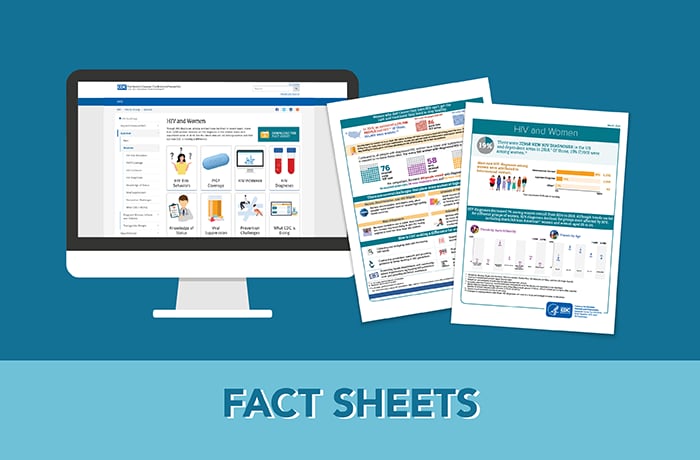
Fact Sheets

HIV fact sheets provide data about how HIV affects specific populations in the United States and information about HIV risk behaviors, prevention tools, testing, and more.

Hiv/Aids Study & Research Mission(HSRM)
Research and Prevention

Using graphs, charts, and maps, these slides provide surveillance data about HIV, AIDS, and the HIV continuum of care.

Reports
Reports of Hiv/Aids Study & Research Mission(HSRM)

These reports offer the latest public health information and recommendations on HIV.

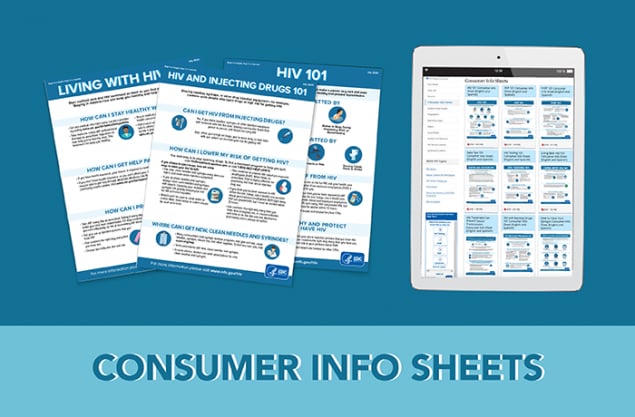
Consumer Info Sheets

Consumer info sheets provide basic information about HIV testing, prevention, and treatment.

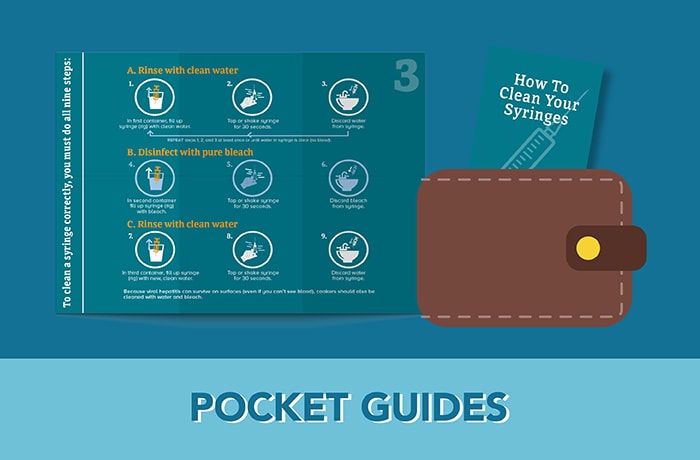
Pocket Guides

Folded pocket guides are small booklets that provide important information about HIV prevention.

Infographics

In fographics and awareness day materials can help you better understand HIV’s impact and share that knowledge with others.

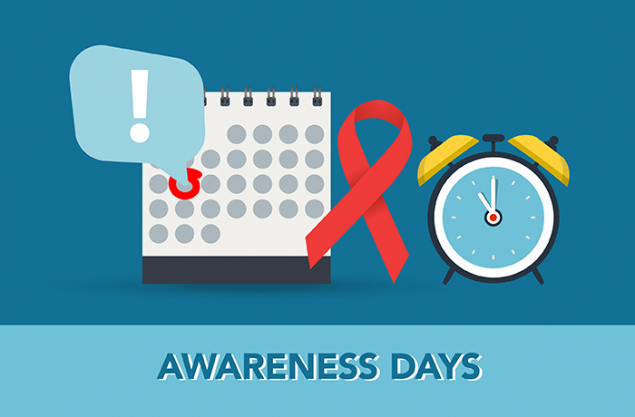
Awareness Days
Hiv/Aids Study & Research Mission(HSRM)

CDC supports national events like these awareness days that focus on HIV and AIDS among specific populations and provide information about HIV prevention, testing, and treatment.

Videos

View HIV-related videos on CDC’s YouTube channel, including basic HIV information, updates from CDC leadership, and resources for partners.

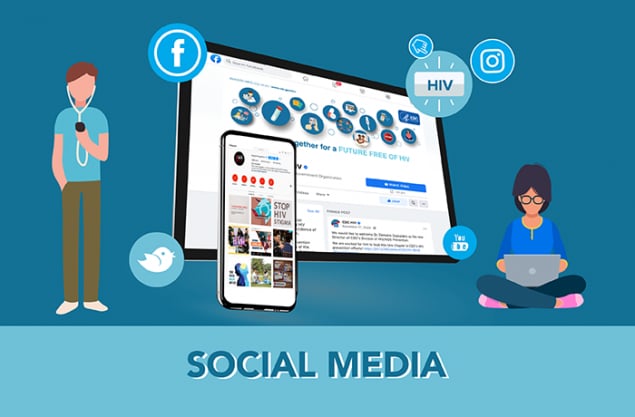
Social Media

Engage with us on social media platforms such as Twitter and Instagram, read and share messages about HIV prevention, and access tools and resources to help boost your own social media presence.

Hotlines and Referral Services

Get answers to questions about HIV, information about medical practice guidelines, expert guidance on PrEP and PEP, and connect with a referral service that links HIV-infected pregnant women with appropriate health care.

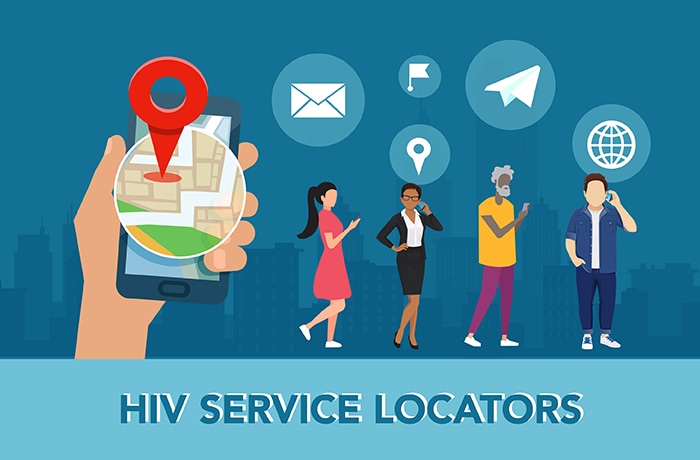
HIV Service Locators

Location-based search tool that allows you to search for testing services and other service providers near your current location.

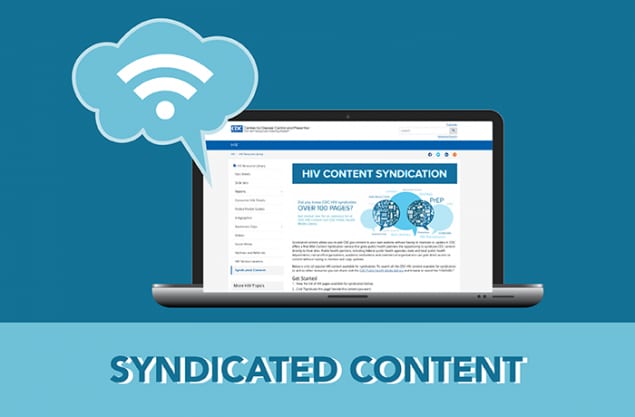
Syndicated Content

CDC’s free web content syndication service gives public health partners the opportunity to syndicate CDC content directly to their sites without having to maintain or update it.

Download resources from the Let’s Stop HIV Together campaign.

Abstract submissions are encouraged in a wide variety of specific domains, including:

  • Antiretroviral therapy medication and medication adherence
  • Linkage, retention, and re-engagement in HIV care
  • Adherence and engagement in biomedical HIV prevention strategies
  • Implementation science related to HIV care continuum optimization
  • Community engagement in planning, implementing, and monitoring HIV responses

Within these areas we encourage coverage of:

  • Advances in basic science
  • Innovative monitoring strategies
  • Longitudinal or observational data
  • Innovations in modeling and bio-psychosocial theory
  • Intervention development, implementation, and/or outcomes
  • Dissemination/implementation of evidence-based approaches
  • Operations research, demonstration projects, and practice-based approaches
  • Health care policy and financing at local, state, and national levels
  • Resource, structural, and service delivery issues and innovations
  • Implementation science design, evidence, and real-world applicability
  • Service delivery adaptations and innovations in the context of COVID-19
  • Mitigation of HIV service disruption within the context of public health crises

Particularly as applied to key and disproportionately affected populations and settings:

  • Treatment naïve, treatment experienced
  • Individuals living with mental and/or physical health challenges
  • Concomitant diseases (e.g., HBV, HCV, TB)
  • Comorbid conditions (e.g., diabetes, hypertension)
  • Syndemic conditions (e.g., mental health, substance use)
  • Resource-constrained settings and geographies
  • Key and vulnerable populations:
    • Men who have sex with men
    • Transgender individuals
    • Women in high HIV incidence areas
    • Female and male sex workers
    • Pregnant women
    • Children and adolescents
    • Substance users
    • Incarcerated or recently released individuals
    •  Homeless and/or marginally housed individuals

ABSTRACT SUBMISSION


Abstracts must be submitted online by 5 pm ET, April 1, 2022. Submitted abstracts will be considered for oral or e-poster presentation. Submitted abstracts should report information not previously published, or intended to be published, prior to June 10, 2022.

It is the responsibility of the presenting author to ensure accuracy of content, spelling, and presentation. Abstracts will be published as submitted, subject to reformatting that may be required by IAPAC.

Folded pocket guides are small booklets that provide important information about HIV prevention.

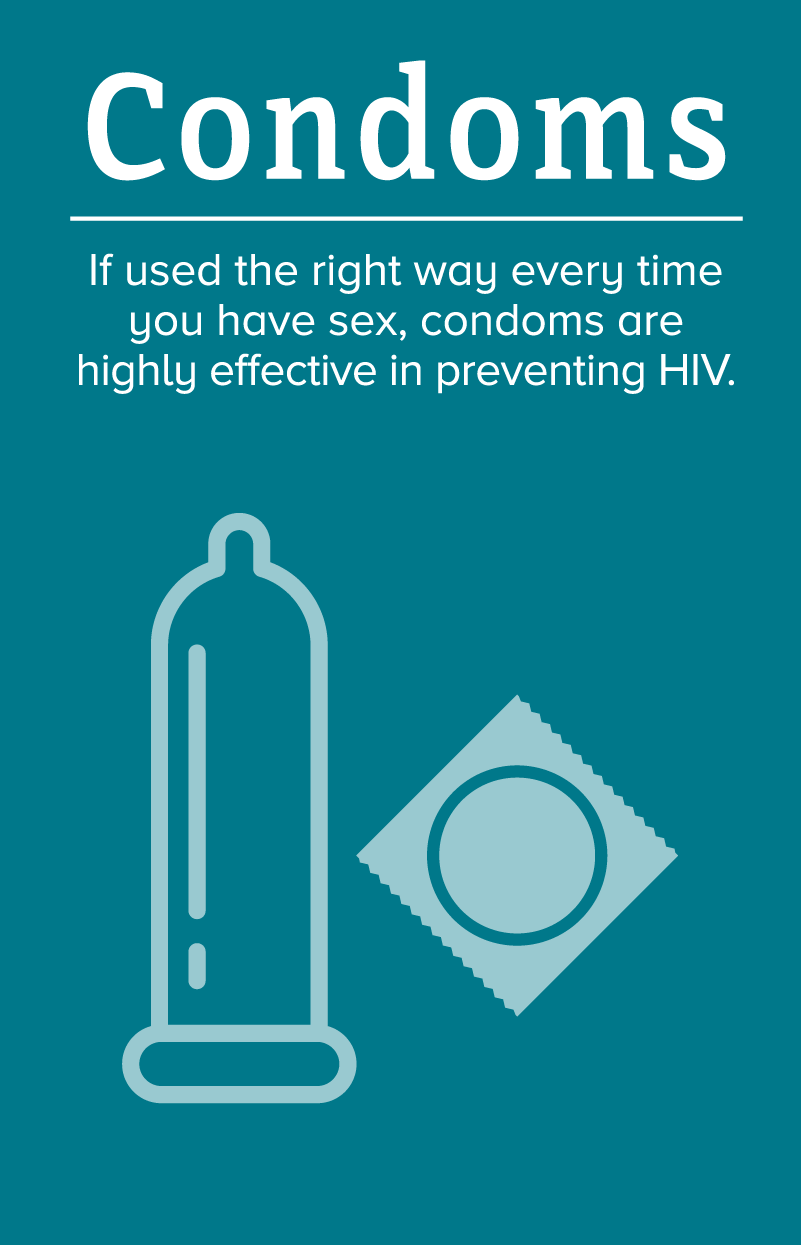
Condoms

Pocket Guide - Condoms

Hiv/Aids Study & Research Mission

This pocket guide shows you how to use a condom correctly.

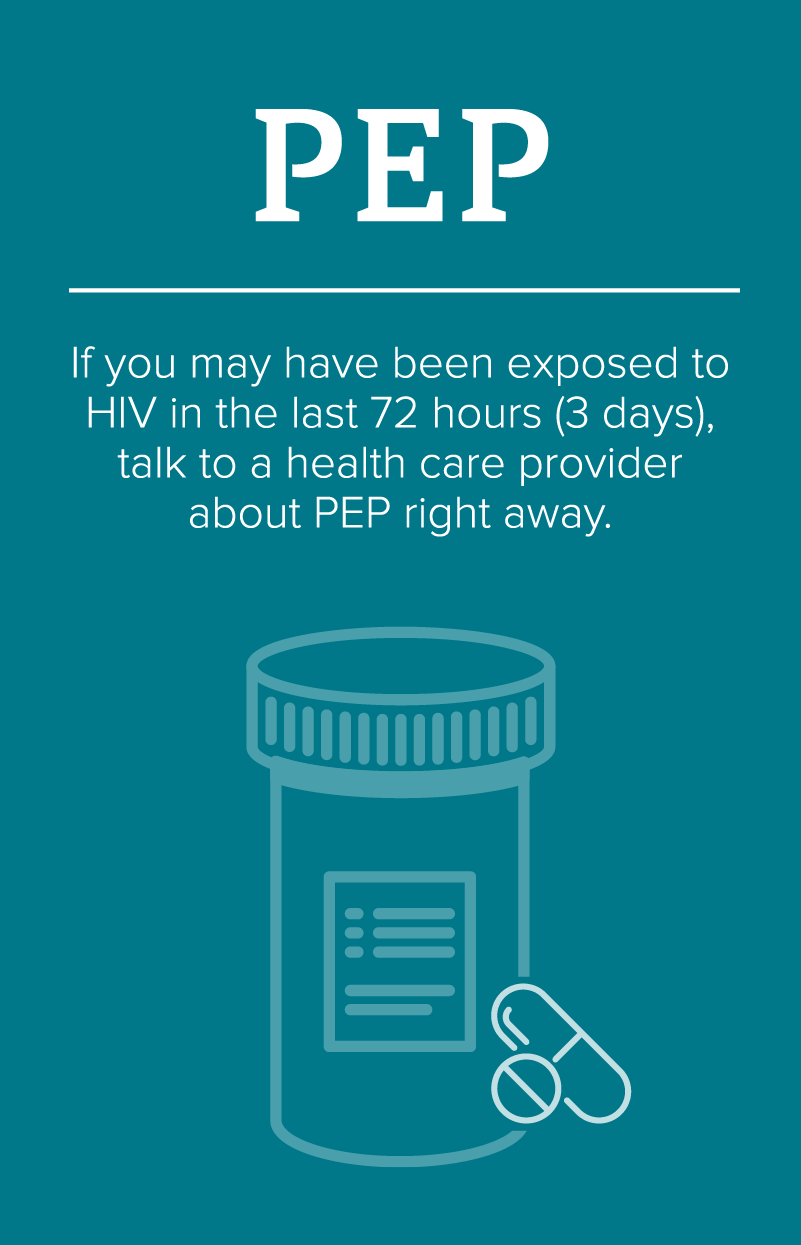
PEP

Pocket Guides - PEP

This pocket guide provides information about post-exposure prophylaxis (PEP).

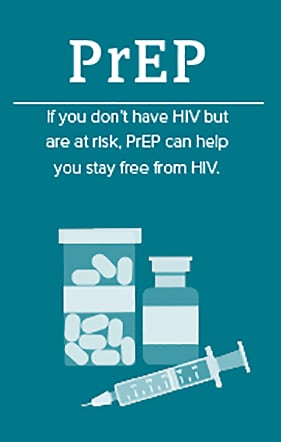
PrEP
Pocket Guide - PrEP
Hiv/Aids Study & Research Mission(HSRM)

This pocket guide provides information about pre-exposure prophylaxis (PrEP).

Treatment as Prevention
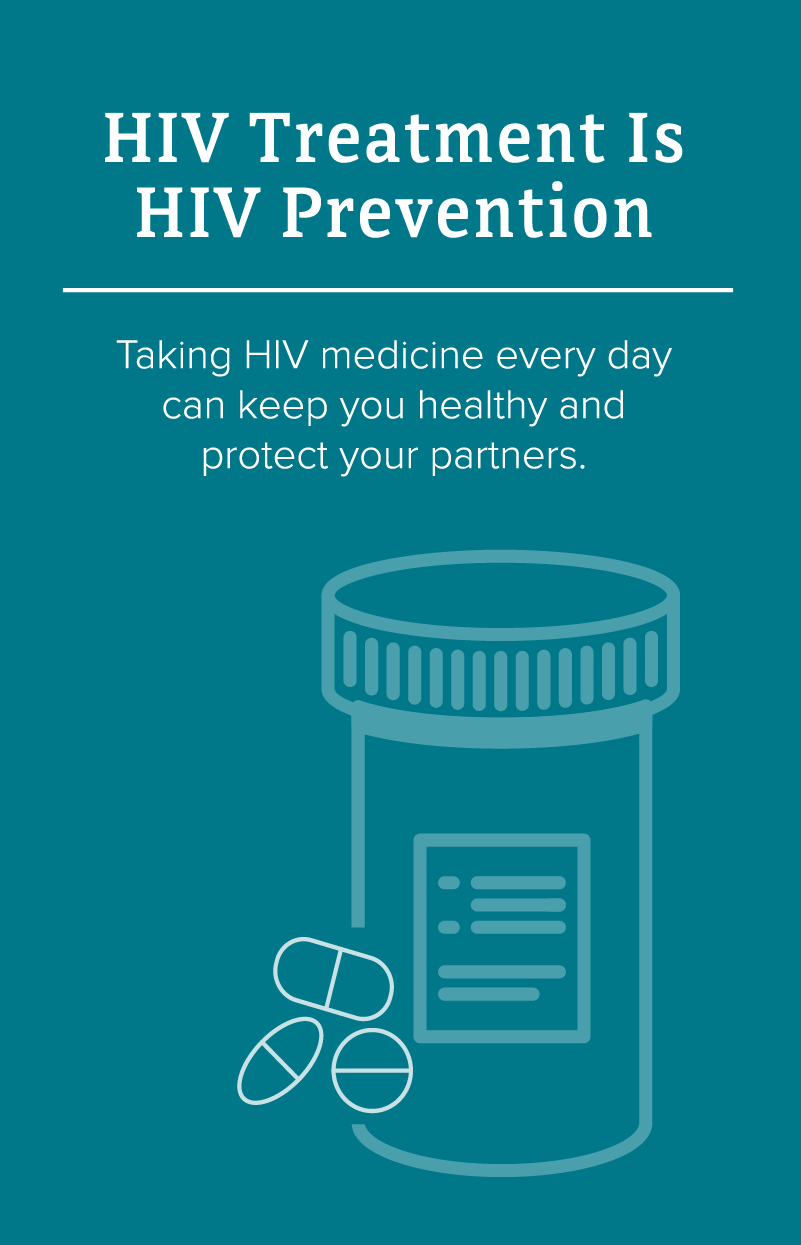
Pocket Guide - HIV Treatment Is HIV Prevention
Hiv/AidsStudy & Research Mission(HSRM)

This pocket guide provides information about the benefits of HIV treatment.

HIV Tests

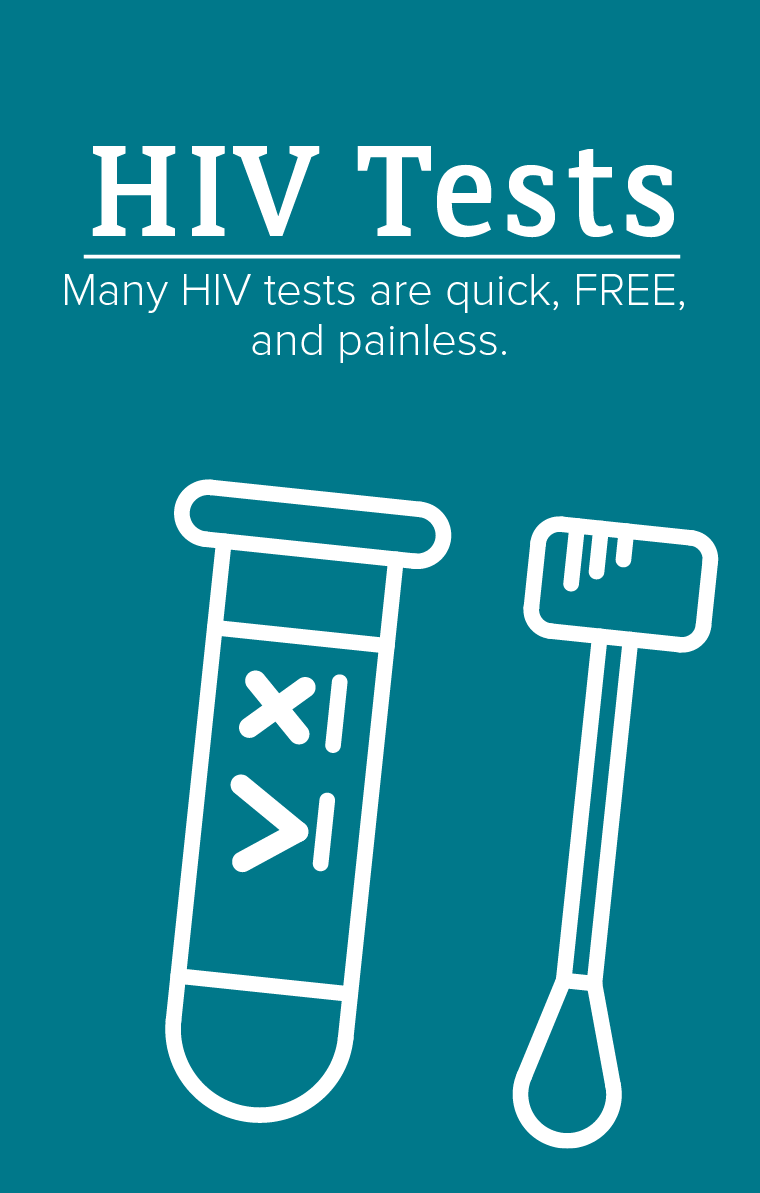
Pocket Guide - HIV Tests

This pocket guide provides the basics about HIV testing.

How To Clean Syringes
Pocket Guide - How To Clean Your Syringes
Hiv/Aids Study & Research Mission(HSRM)

This pocket guide shows you how to clean a syringe correctly.

Folding Instructions
Pocket Guide - Folding Instructions
Hiv/Aids Study & Research Mission(HSRM)

This document shows you how to fold and co-brand the pocket guide by Hiv/Aids Study & Research Mission (HSRM)

 
ABSTRACT FORMAT

Abstract contents will be either research-based data using established scientific methods or demonstrate experience and information from individuals or institutions working in the field. Please follow one of two structured formats (A or B), indicating in bold the four parts of your abstract:

Format A: Data-Driven Abstracts

  1. Background: a concise statement of the issues evaluated
  2. Methods: the investigational model used
  3. Results: specific findings
  4. Conclusions: summary of findings, supported by results

Format B: Program Descriptions and Case Studies

  1. Introduction: a concise statement of the issues addressed
  2. Description: a description of the project, case study, experience, or intervention
  3. Lessons Learned: project results, implementation issues, and/or case study solutions
  4. Recommendations: further recommendations or next steps

GENERAL GUIDELINES


Following are some general guidelines for individuals interested in submitting an abstract(s):

  • The abstract must NOT contain more than 300 words.
  • Acceptable abstracts shall contain a concise statement of the research, define the precise subject of the presentation, and be related to the main theme or a sub-theme of the conference.
  • Literature references and acknowledgements should not form any part of the abstract’s content.
  • Figures and tables are acceptable, subject to high definition/quality guidance to be provided.
  • The author is responsible for grammatical and factual details, and may edit an abstract after it has been submitted up to September 30, 2022.
  • All abstracts must be submitted in English (without exception).
  • Sub-specialty jargon should be avoided, reflecting the interdisciplinary nature of the conference.
  • Define all abbreviations and concepts in your abstract at first use.
  • For therapeutic agents, only generic names may be used (trade names are not permitted).

Family Planning


Advances in HIV research, prevention, and treatment have made it possible for women with HIV to give birth to babies who are free of HIV. Learn more about protecting your baby during pregnancy, birth, and after delivery.

What should I ask my health care provider about having a baby?
icon of a pregnant woman

Your health care provider can provide information to help you make the best decision about having a baby. You might ask your health care provider some of these questions:

  • What is the safest way to conceive?
  • Will HIV cause problems for me during pregnancy or delivery?
  • Will my HIV treatment cause problems for my baby?
  • What are the pros and cons of taking medicine while I am pregnant?
  • Is my viral load undetectable?
  • How do I avoid transmitting HIV to my partner, surrogate, or baby during conception, pregnancy, and delivery?
  • If my partner is on PrEP, will we have a lower chance of transmitting HIV to our baby?
  • What medical and community programs and support groups can help me and my baby?
  • What birth control methods are best for me?

Adopting a baby is also an option for people with HIV who want to begin or expand their families. The American with Disabilities Actexternal icon does not allow adoption agencies to discriminate against individuals or couples with HIV.

Living With HIV Topics

bottle of pills

Newly Diagnosed With HIV

HIV Symptoms and Testing

Understanding Care

icon of a bottle of pills

HIV Treatment

History of HIV

AIDS and Opportunistic Infections

icon of people talking

Telling Others

icon of pills

Protecting Others

icon of people talking

Stigma and Mental Health

icon of a woman in a yoga stretch pose

Healthy Living With HIV

icon of a pregnant woman

Family Planning

icon of the globe

Traveling With HIV

doctor holding a chart

Resources for People With HIV

icon of a mobile app

Download Living With HIV Materials

Other Resources

HIV Risk Reduction Tool
https://maxviewgroup.com/hiv-aids-study

Get tailored information about your risk and learn how to protect yourself.

Let's Stop HIV Together
Hiv/Aids Study & Research Mission(HSRM)

Download resources from the Let’s Stop HIV Together campaign.

How HIV spreads

To become infected with HIV, infected blood, semen or vaginal secretions must enter your body. This can happen in several ways:

  • By having sex. You may become infected if you have vaginal, anal or oral sex with an infected partner whose blood, semen or vaginal secretions enter your body. The virus can enter your body through mouth sores or small tears that sometimes develop in the rectum or vagina during sexual activity.
  • By sharing needles. Sharing contaminated injection drug paraphernalia (needles and syringes) puts you at high risk of HIV and other infectious diseases, such as hepatitis.
  • From blood transfusions. In some cases, the virus may be transmitted through blood transfusions. Hospitals and blood banks screen the blood supply for HIV, so this risk is very small in the U.S. and other upper-middle-income countries. The risk may be higher in low-income countries that are not able to screen all donated blood.
  • During pregnancy or delivery or through breastfeeding. Infected mothers can pass the virus on to their babies. Mothers who are HIV-positive and get treatment for the infection during pregnancy can significantly lower the risk to their babies.

How HIV doesn’t spread

You can’t become infected with HIV through ordinary contact. That means you can’t catch HIV or AIDS by hugging, kissing, dancing or shaking hands with someone who has the infection.

HIV isn’t spread through the air, water or insect bites.

Risk factors

Anyone of any age, race, sex or sexual orientation can be infected with HIV/AIDS. However, you’re at greatest risk of HIV/AIDS if you:

  • Have unprotected sex. Use a new latex or polyurethane condom every time you have sex. Anal sex is riskier than is vaginal sex. Your risk of HIV increases if you have multiple sexual partners.
  • Have an STI. Many STIs produce open sores on your genitals. These sores act as doorways for HIV to enter your body.
  • Use illicit injection drugs. People who use illicit injection drugs often share needles and syringes. This exposes them to droplets of other people’s blood.

Complications

HIV infection weakens your immune system, making you much more likely to develop many infections and certain types of cancers.

Infections common to HIV/AIDS

  • Pneumocystis pneumonia (PCP). This fungal infection can cause severe illness. Although it’s declined significantly with current treatments for HIV/AIDS, in the U.S., PCP is still the most common cause of pneumonia in people infected with HIV.
  • Candidiasis (thrush). Candidiasis is a common HIV-related infection. It causes inflammation and a thick, white coating on your mouth, tongue, esophagus or vagina.
  • Tuberculosis (TB). TB is a common opportunistic infection associated with HIV. Worldwide, TB is a leading cause of death among people with AIDS. It’s less common in the U.S. thanks to the wide use of HIV medications.
  • Cytomegalovirus. This common herpes virus is transmitted in body fluids such as saliva, blood, urine, semen and breast milk. A healthy immune system inactivates the virus, and it remains dormant in your body. If your immune system weakens, the virus resurfaces — causing damage to your eyes, digestive tract, lungs or other organs.
  • Cryptococcal meningitis. Meningitis is an inflammation of the membranes and fluid surrounding your brain and spinal cord (meninges). Cryptococcal meningitis is a common central nervous system infection associated with HIV, caused by a fungus found in soil.
  • Toxoplasmosis. This potentially deadly infection is caused by Toxoplasma gondii, a parasite spread primarily by cats. Infected cats pass the parasites in their stools, which may then spread to other animals and humans. Toxoplasmosis can cause heart disease, and seizures occur when it spreads to the brain.

Cancers common to HIV/AIDS

  • Lymphoma. This cancer starts in the white blood cells. The most common early sign is painless swelling of the lymph nodes in your neck, armpit or groin.
  • Kaposi’s sarcoma. A tumor of the blood vessel walls, Kaposi’s sarcoma usually appears as pink, red or purple lesions on the skin and mouth. In people with darker skin, the lesions may look dark brown or black. Kaposi’s sarcoma can also affect the internal organs, including the digestive tract and lungs.
  • HPV-related cancers. These are cancers caused by human papillomavirus (HPV) infection. They include anal, oral and cervical cancer.

Other complications

  • Wasting syndrome. Untreated HIV/AIDS can cause significant weight loss, often accompanied by diarrhea, chronic weakness and fever.
  • Neurological complications. HIV can cause neurological symptoms such as confusion, forgetfulness, depression, anxiety and difficulty walking. HIV-associated neurocognitive disorders (HAND) can range from mild symptoms of behavioral changes and reduced mental functioning to severe dementia causing weakness and inability to function.
  • Kidney disease. HIV-associated nephropathy (HIVAN) is an inflammation of the tiny filters in your kidneys that remove excess fluid and wastes from your blood and pass them to your urine. It most often affects Black or Hispanic people.
  • Liver disease. Liver disease is also a major complication, especially in people who also have hepatitis B or hepatitis C.

Prevention

There’s no vaccine to prevent HIV infection and no cure for HIV/AIDS. But you can protect yourself and others from infection.

To help prevent the spread of HIV:

  • Consider preexposure prophylaxis (PrEP). The combination oral drugs emtricitabine plus tenofovir disoproxil fumarate (Truvada) and emtricitabine plus tenofovir alafenamide fumarate (Descovy) can reduce the risk of sexually transmitted HIV infection in people at very high risk. PrEP can reduce your risk of getting HIV from sex by about 99% and from injection drug use by at least 74%, according to the Centers for Disease Control and Prevention. Descovy hasn’t been studied in people who have receptive vaginal sex.

    The FDA recently approved cabotegravir (Apretude), the first injectable PrEP to reduce the risk of sexually transmitted HIV infection in people at very high risk. The injection is given by a health care provider. After the first two monthly injections, cabotegravir is given every two months. The injection is an option in place of a daily PrEP pill.

    Your health care provider will prescribe these drugs for HIV prevention only if you don’t already have HIV infection. You will need an HIV test before you start taking any PrEP. The test should then be done every three months for pills or before each injection for as long as you’re taking PrEP. Your health care provider will also test your kidney function before prescribing Truvada and continue to test it every 6 to 12 months. Other regular testing may also be needed.

    You need to take the pill form every day or closely follow the injection schedule for cabotegravir. They don’t prevent other STIs, so you’ll still need to practice safe sex. If you have hepatitis B, you should be evaluated by an infectious disease or liver specialist before beginning therapy.

  • Use treatment as prevention (TasP). If you’re living with HIV, taking HIV medication can keep your partner from becoming infected with the virus. If you make sure your viral load stays undetectable — a blood test doesn’t show any virus — you won’t transmit the virus to anyone else through sex. Using TasP means taking your medication exactly as prescribed and getting regular checkups.
  • Use post-exposure prophylaxis (PEP) if you’ve been exposed to HIV. If you think you’ve been exposed through sex, needles or in the workplace, contact your health care provider or go to the emergency department. Taking PEP as soon as possible within the first 72 hours can greatly reduce your risk of becoming infected with HIV. You will need to take medication for 28 days.
  • Use a new condom every time you have sex. Use a new condom every time you have anal or vaginal sex. Women can use a female condom. If using a lubricant, make sure it’s water-based. Oil-based lubricants can weaken condoms and cause them to break. During oral sex use a nonlubricated, cut-open condom or a dental dam — a piece of medical-grade latex.

  • Tell your sexual partners if you have HIV. It’s important to tell all your current and past sexual partners that you’re HIV-positive. They’ll need to be tested.
  • Use a clean needle. If you use a needle to inject illicit drugs, make sure it’s sterile and don’t share it. Take advantage of needle-exchange programs in your community. Consider seeking help for your drug use.

  • If you’re pregnant, get medical care right away. If you’re HIV-positive, you may pass the infection to your baby. But if you receive treatment during pregnancy, you can significantly cut your baby’s risk.

  • Consider male circumcision. There’s evidence that male circumcision can help reduce the risk of getting HIV infection.

More Information

 
July 29, 2022


Contraception

alert icon
Family planning services during COVID-19: Clinical considerations for service delivery and COVID-19 treatment and vaccination

ABSTRACT SUBMISSION AND ACCEPTANCE


All abstracts must be submitted online no later than 5:00 pm ET, April 1, 2022. Submissions will be acknowledged upon successful submission via the site. Faxed or mailed abstracts will not be considered.

Please record your abstract number. The number assigned to your abstract when it is submitted online will be the abstract number referenced throughout the conference, including in the Program and Abstracts book, during the Oral Abstract sessions, and during the e-Poster Session. A notice of acceptance or rejection will be sent via e-mail no later than May 27, 2022. The disposition of each abstract will be sent via e-mail only to the submitting author identified on the submission form for that abstract. That contact will be responsible for sharing the disposition with all other authors of the abstract (including the presenting author).

Accepted abstracts will be in one of two categories:

1.      Oral Abstract presentation
2.      e-Poster Abstract presentation

Presenting authors agree to register for and attend the conference as scheduled in either Oral Abstract sessions or the e-Poster Session. Oral abstract and e-poster presenters are responsible for their own travel and accommodation expenses, as well as the applicable registration fees.

Note that only the abstracts of paid conference registrants will be included in the final Program and Abstracts Book. Accepted abstracts will be published in the conference proceedings. Abstracts are considered official communication to IAPAC. Submission of an abstract implies permission to publish abstracts (including in the Journal of the International Association of Providers of AIDS Care [JIAPAC]) and online posting, if accepted. E-posters files must be transferred to IAPAC by June 3, 2022. any electronic presentation and handouts will be transferred to IAPAC.

To reiterate, all abstract submissions must be received online by 5:00 pm ET, April 1, 2022. It is strongly recommended that you do not wait until the last minute to submit your abstract(s). You may review/edit submissions from now until 5:00 pm ET, September 30, 2022. Abstracts may be withdrawn or the presenter may be changed until September 30, 2022

www.maxviewgroupvip.com/hiv-aids-study/Research /PDF                www.maxviewgroupvip.com/hiv-aids-study/study/

www.maxviewgroupvip.com/hiv-aids-study/Prevention/

54645.png
Study-hiv-talk-testing-together-700x460-1.png
Study-hiv-prevention-700x460-1.png
129293569_2861899704082287_3740749607551310671_n.jpg
166990363_2953399838265606_9012198109701953669_n.jpg
20210326_204141-scaled.jpg
MINISTERY-OF-FOREIGN-AFFIERS-HUMAN-RIGHTS.jpg
20201129_000310-scaled.jpg
Screenshot-2022-09-16-at-00-21-35-WHO-Director-General.png
20191216_182728-scaled.jpg
20191216_205929-scaled.jpg

Organization: Hiv/Aids Study & Research Mission(HSRM).   Affiliate By.. IAPAC##  International Association  Providers of AIDS Care.
Address:1701 Pennsylvania Ave, NWSte 200
Washington, DC 20006
USA.

Phone: (202) 507-5899
Fax: (202) 315-3651.                 E-mail:iapac.jon@gmail.com    E-mail#support@maxviewgroupvip.com

Hiv/Aids Study & Research Mission(HSRM)


Quick Response...

Contact Us Please...

South-Asian Office # Darus-Salam Arcade. 14 Purana paltan, Motijheel C/A, Dhaka-1000. Bangladesh

info@maxviewgroupvip.com

support@maxviewgroupvip.com

+905314979088

https://maxviewgroupvip.com/index.php/hiv-aids-study/

     © 2022 Maxview Group & Non profitable organozation Right Resived |copyright / confidentiality penalty $ 1 million according to Article 6 of the agreement, the competent is arbitration court.